
Where things stand right now
It's late April, and if you work on packaging data at a consumer goods brand, your calendar is probably organized around one date right now: May 31, 2026. That's the first common reporting deadline across six state Extended Producer Responsibility programs — Oregon, Colorado, California, Maryland, Minnesota, and Washington — all of which have selected the Circular Action Alliance as their single producer responsibility organization. Five weeks out, the teams we talk to aren't panicked. They're heads-down, working through the last mile of data assembly, and asking pointed questions about what their first report will actually signal to regulators and to the PRO itself.
It's a meaningful moment. The broad industry conversation about EPR — the one that has dominated sustainability conferences for years — is giving way to a narrower, more operational one. Which SKUs are covered? Which material categories do we have clean weights for? Whose name goes on the registration? How do we reconcile supplier-reported data with what shipped out of our own facilities? These are good questions. They're also questions that don't resolve themselves without a system of record behind them.
For context: EPR for packaging in the United States moved from concept to implementation over the past eighteen months. Oregon was first to activate fee obligations, starting July 1, 2025. Colorado followed on January 1, 2026. California's fee obligations begin January 2027. Maryland, Minnesota, and Washington are in their registration and early-reporting phases, and Maine is working toward full implementation in 2027. Across all six, the Circular Action Alliance serves as the single PRO — a coordinating nonprofit that collects producer data, manages fee assessment, and interfaces with each state's program administrator.
The May 31, 2026 deadline is the first real synchronization point. Producers across these states are submitting 2025 packaging data — by material category, by format, by weight — that CAA will use to set fees for each state program. For Oregon and Colorado, these reports roll into fee cycles already underway. For the others, they're foundational records that will shape how obligations get calibrated over the next several years.
Meanwhile, Europe is moving in parallel. The Packaging and Packaging Waste Regulation (Regulation 2025/40) entered into force in February 2025 and becomes generally applicable on August 12, 2026. The European Commission released its final guidance document this spring, which clarified a number of issues that had been unsettled in the text: how empty-space limits apply to e-commerce parcels (capped at 40% unless technically unavoidable), how substances of concern should be minimized in packaging, and what a compliant EU declaration of conformity looks like under Article 39. For any CPG brand that sells into both the United States and Europe, the next four months carry two distinct but converging tracks. They are not the same regulatory regime. They do, however, share a common data requirement: you need to know, with confidence, exactly what is in your packaging and how much of it you put into the market.
What the May 31 CAA report actually asks for
The CAA reporting framework asks producers to break down 2025 packaging volumes by material category — think PET bottles, HDPE bottles, glass, aluminum, fiber-based materials, flexible plastic film, composite packaging, and so on — and to report weights at the SKU or product-family level. For most mid-size CPG brands, this sounds simple until it isn't. Weights are rarely stored in a single system. Some live in packaging engineering spreadsheets. Some live in ERP item master records that were set up years ago for different purposes. Some live only with the packaging supplier, and retrieving them means chasing component bills of materials across dozens of vendor relationships.
Producers also need to designate a responsible entity in each state where they have obligations. Because EPR in the US is a state-by-state patchwork with a shared PRO, you have to think through which legal entity is actually the "producer" under each state's statutory definition — brand owner, importer, licensee, or distributor — and register accordingly. That determination changes for private label, for co-manufactured products, and for brands sold through parent companies with multiple operating entities.
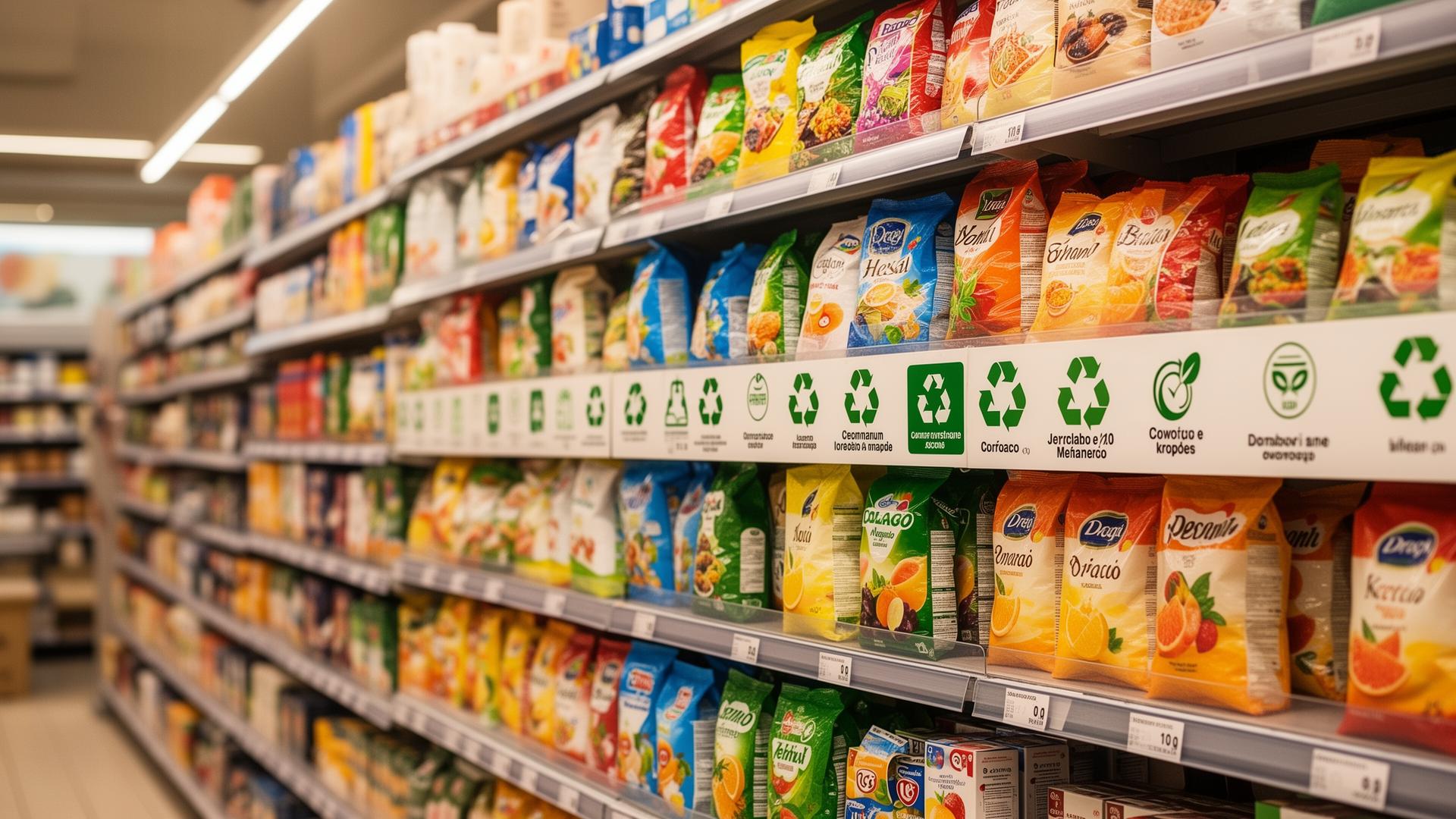
Finally, there's the recyclability classification. California's SB 343 Truth in Labeling law has a compliance date of October 4, 2026, after which on-pack recyclability claims must be backed by documented evidence that the material is actually recyclable in California. Teams are treating the May 31 report as an early checkpoint on how their portfolio will be classified — and whether existing "chasing arrows" graphics will still be defensible later this year.
What the EU PPWR August 12 date adds
For brands that sell into Europe, PPWR compounds the data challenge rather than duplicating it. The PPWR obligations that kick in on August 12, 2026 include packaging design and space-efficiency rules, the minimization of substances of concern, and conformity assessment procedures that require a manufacturer-level declaration supported by technical documentation. For e-commerce-heavy brands, the 40% empty-space cap is the rule drawing the most attention — because parcel configurations that felt like operational decisions a year ago now have to be justified and documented.
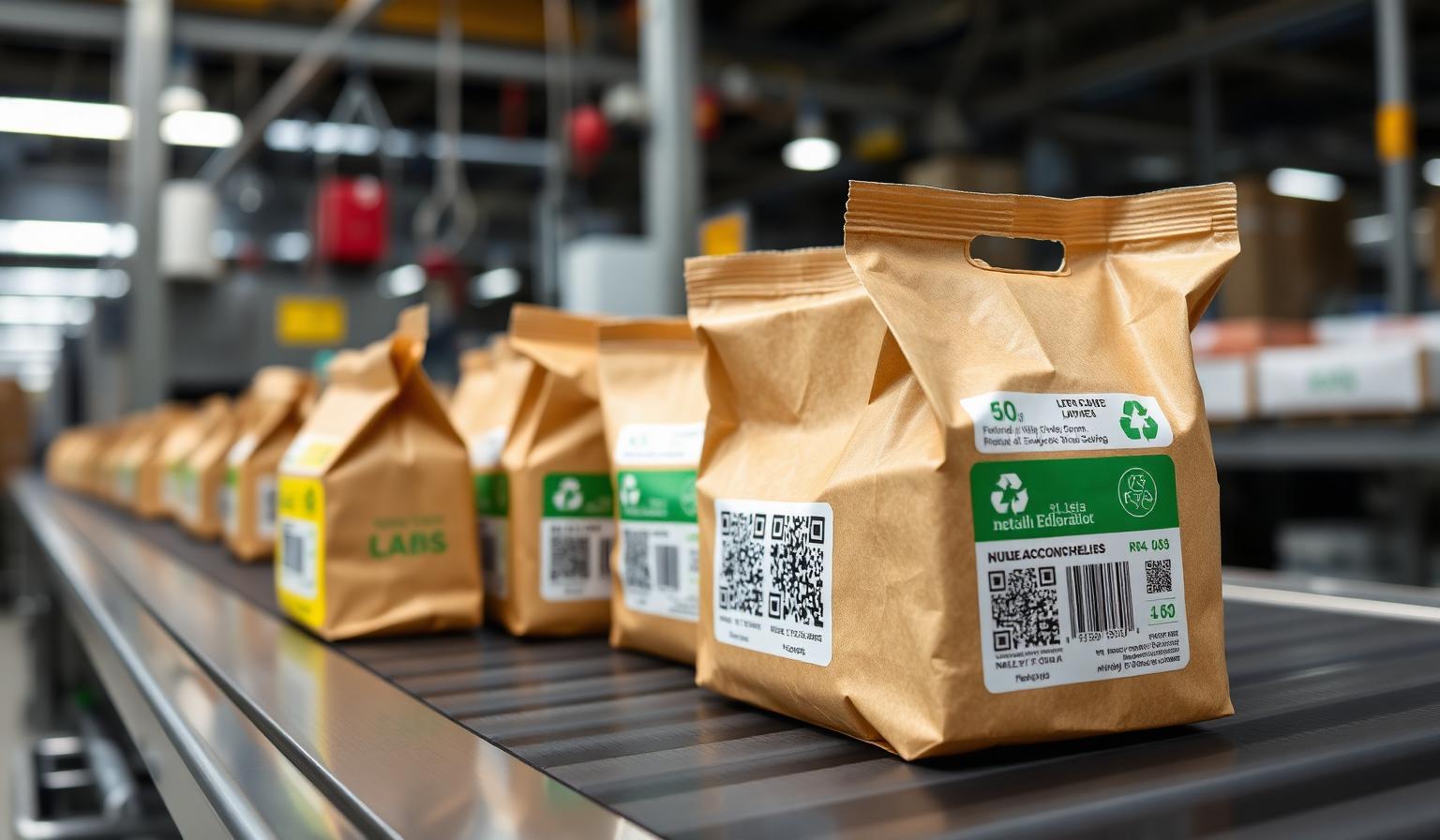
From 2027 onward, digital identifiers (typically QR codes on-pack) will link to structured environmental information including material composition, recyclability, and reuse details. That's a data-model requirement, not a printing requirement. It means every SKU has a structured record that is accurate, versioned, and maintained as reformulations or packaging changes roll through. From 2030, only packaging with recyclability grades A-C will be allowed on the EU market, and minimum recycled content thresholds for plastics begin to apply.
Here's the quiet point worth naming: the datasets required for PPWR compliance in Europe and EPR compliance in the US overlap significantly. If you build a packaging data system for one, you have the foundation you need for the other. If you build them separately, you end up maintaining two sources of truth that will drift apart the first time a formulation or supplier changes. Teams that have already made this connection are building once and reporting many times. Teams that haven't are about to have a harder 2027 than they need to.
Where most teams are spending the last month
Across the producers we've worked with this cycle, the final thirty-day stretch tends to look remarkably similar. First comes data consolidation — pulling weights and material compositions out of supplier sheets, ERP records, and packaging engineering files into a single structured dataset. Second comes reconciliation — comparing reported component weights against actual volumes shipped, catching the SKUs where a supplier weight is missing or where a private-label product never got attributed to the correct legal entity. Third comes entity alignment — confirming that the producer named on each state's registration matches the legal entity that will bear the fee obligation. Fourth comes the actual report submission and the documentation package that will sit alongside it.
The brands that move through this cleanly have one thing in common: a system of record that treats packaging as structured, versioned, per-SKU data — not as a folder full of spec sheets. When a supplier change happens mid-year, the system captures it and the next report reflects it. When a new SKU launches, the data model forces the packaging information to be completed before the product ships. When the CAA portal asks for a specific material category breakdown that didn't exist last year, the underlying dataset already contains the fields needed to derive it. That's the quiet work that makes compliance reporting stop feeling like a fire drill and start feeling like a routine process.
A mid-size beverage producer we worked with this winter went through exactly this exercise. Their first pass at the CAA data pull surfaced roughly 180 SKUs where component weights were missing from at least one packaging element — usually secondary packaging like case trays or shipping labels. Rather than chase each one through supplier email, they stood up a lightweight intake process where their top suppliers could submit weight and material data directly into a structured template. Within three weeks, the gap closed. The report submission itself took a few hours instead of the several-week scramble their packaging and sustainability leads had been bracing for.
What made the difference wasn't a larger team or a bigger budget. It was a decision earlier in the process to make packaging data a first-class record rather than a downstream deliverable. When the supplier template landed in front of procurement, procurement already understood why the data mattered and how it would be used. When the packaging engineers received change requests, those changes flowed back into the same structured record the sustainability team was reporting from. The reporting process stopped living in a side-channel spreadsheet and started living in the same system the rest of the organization was already using. That's the shift that actually matters — and it's the shift that's most portable across the coming years of obligations.
Practical takeaways
Start from your ERP item master, not from memory. Pull every active SKU that shipped during the 2025 reporting period, then work backward to match material and weight data to each one. Gaps in the item master will surface immediately, and they are easier to close now than at hour twenty-three.
Confirm your producer designation by state before you register. The legal entity responsible for a private-label SKU in Oregon may not be the same as the one responsible for a co-manufactured SKU in Maryland. These determinations are survivable if you catch them in April. They are painful if you catch them after fees are assessed against the wrong entity.
Treat supplier data collection as a system, not a one-time ask. A shared template, a clear deadline, and a single point of contact on both sides will close gaps faster than threaded email. Build the template once, reuse it annually, and keep it tied to your packaging spec system so updates flow through without re-collection.
Map your US EPR dataset to your EU PPWR dataset now. If you're exporting to Europe, the data fields you build for CAA are most of what you need for the PPWR conformity assessment. Structuring them once — with material composition, recyclability classification, and weight per SKU — saves meaningful effort over the next eighteen months.
Don't over-engineer the first report. Regulators understand that this is year one. A well-documented submission with honest caveats on known data gaps is stronger than a polished submission that papers over uncertainty. The goal right now is to establish a reliable baseline, not to produce a finished annual report.
Closing
The producer responsibility conversation has shifted. A year ago it was mostly about strategy — which states to prepare for, how much to budget, which materials to redesign. In April 2026 it is mostly about execution: clean data, clear ownership, reliable submission. The teams navigating it well are not necessarily the biggest ones. They're the ones that treat packaging data as infrastructure and reporting as a recurring process, rather than as a project.
We've been working alongside several CPG producers through this reporting cycle, and we'd be glad to compare notes on what we're seeing — data-model patterns that hold up under multi-state reporting, supplier collection workflows that reduce chase time, and how teams are connecting their US EPR work to PPWR preparation without building parallel systems. If any of that is useful to what you're building, reach out at sales@gcurv.com. Always happy to trade observations with teams thinking through the same questions, whether you're five weeks from your first submission or already thinking about how next year's report should look different.
Deeper dives on adjacent topics
We curate independent perspectives that complement this article. The links below point to detailed analyses on packgine.ai — a sister source for packaging compliance, EPR, PPWR, and circularity.
- PackgineEPR for Packaging: State-by-State Guide ↗
- PackginePPWR Explained: What CPG Brands Must Do ↗
- PackgineCalifornia SB 343: Recyclability Labeling ↗
- PackgineCircular Action Alliance: Producer Reporting ↗
- PackgineEPR Data Chaos: Spreadsheets vs Software ↗
- PackgineDigital Product Passports for Packaging ↗